My Golden
Milestones
Rawdon Manse, Nether Yeadon,
Leeds, Yorks.
Aireborough (the district comprising Rawdon, Yeadon and Guiseley) is on high ground between the valleys of the Aire and the Wharfe. If Wollaston was hilly after Soham, Aireborough was much more so. Mrs. Hardisty, the choir leader at Rawdon, used to quote feelingly the lines: -
“The
hills that gird our dwelling round,
As
Thou dost gird Thine own with love.”
Phyllis had once spent a holiday at Menston, in the company of her cousin Cyril Petch and his wife Edie. But the area was entirely new to
me. Situated between Leeds, Bradford and Ilkley, it had the advantage of
proximity to the cities and to the countryside. We enjoyed the experience of
living and working with North Country folk. The accent was pleasing, and their
manner straightforward and welcoming.
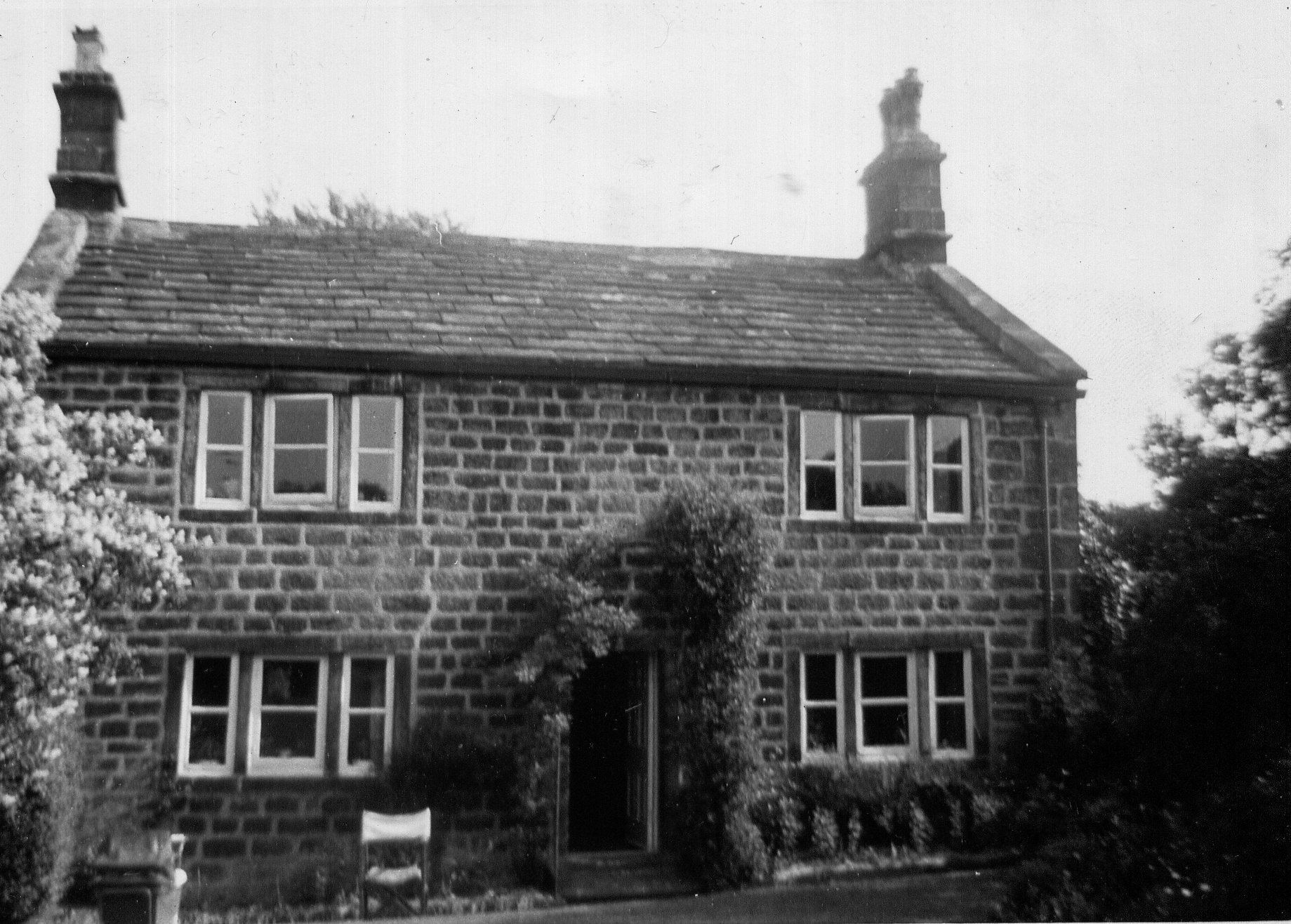
We occupied the manse belonging to the Rawdon church.
We guessed it was perhaps 300 years old, with low ceilings, oak beams, thick
walls and window seats. It was double-fronted with a twisting staircase, four
bedrooms, and a bathroom. There was also a large room over outhouses, which was
renovated, and appreciated by our family as a playroom[1].
The house was end on to the road, with a lawn and kitchen garden in the front,
and a paddock at the back. Legend had it that at one time it belonged to two
sisters, whose brother wanted to turn it into a public
house. But they were determined not to allow this, and gave it to the church
for a manse.
The two churches we had come to serve were quite
different in character, but in a way complemented each other. 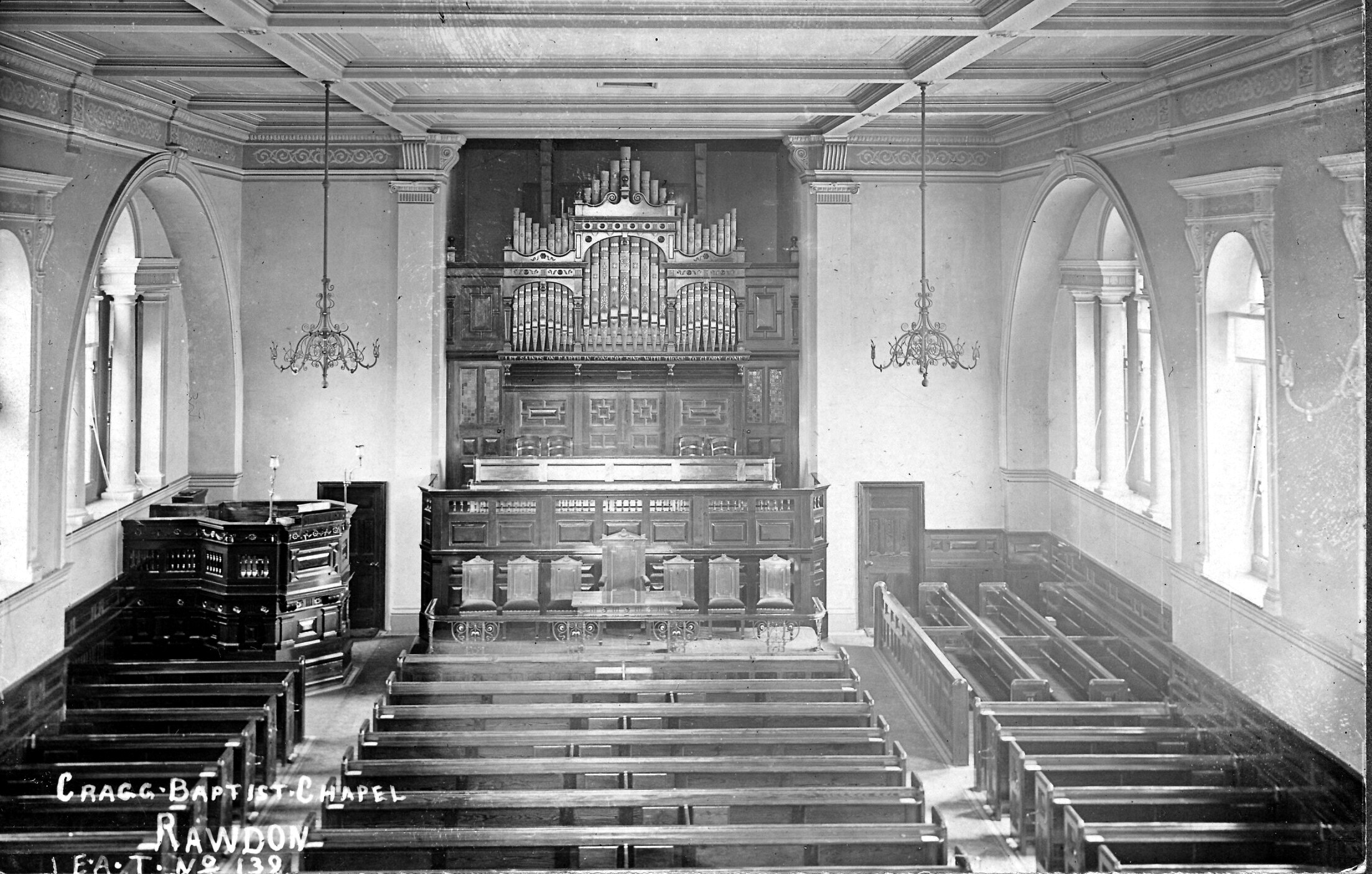 The
Rawdon church dated back to 1712, when it had been formed in Cragg Wood. Its spiritual beginnings may have been related
to the repression under Charles II. The area was far enough from Leeds and
Bradford to satisfy the demands of the Five-Mile Act, and the woods afforded a
measure of concealment in times of persecution. Then came the time when Mr.
Rawdon, at Rawdon Hall, welcomed wandering preachers, and would order linen
cloths to be put on his bushes, so that people across the valley would know
that a service was to be held. In our time, an annual service used to be held
at Buckstone Rock, to commemorate these early
beginnings. The original church in Cragg Wood had
been rebuilt on the present site in Micklefield Lane
towards the end of the 19th century[2],
in a very imposing style, but too large for present needs,
and so its maintenance became a heavy drain on resources.
The
Rawdon church dated back to 1712, when it had been formed in Cragg Wood. Its spiritual beginnings may have been related
to the repression under Charles II. The area was far enough from Leeds and
Bradford to satisfy the demands of the Five-Mile Act, and the woods afforded a
measure of concealment in times of persecution. Then came the time when Mr.
Rawdon, at Rawdon Hall, welcomed wandering preachers, and would order linen
cloths to be put on his bushes, so that people across the valley would know
that a service was to be held. In our time, an annual service used to be held
at Buckstone Rock, to commemorate these early
beginnings. The original church in Cragg Wood had
been rebuilt on the present site in Micklefield Lane
towards the end of the 19th century[2],
in a very imposing style, but too large for present needs,
and so its maintenance became a heavy drain on resources.
The church in Guiseley [photo to come] was formed in 1884, largely through the endeavours
of the Rawdon church and the Rawdon Baptist College. The building in Oxford
Road was an all-purpose structure, and a schoolroom was later added at the side.
It was a smaller building, more suited to its needs, and more easily
maintained.
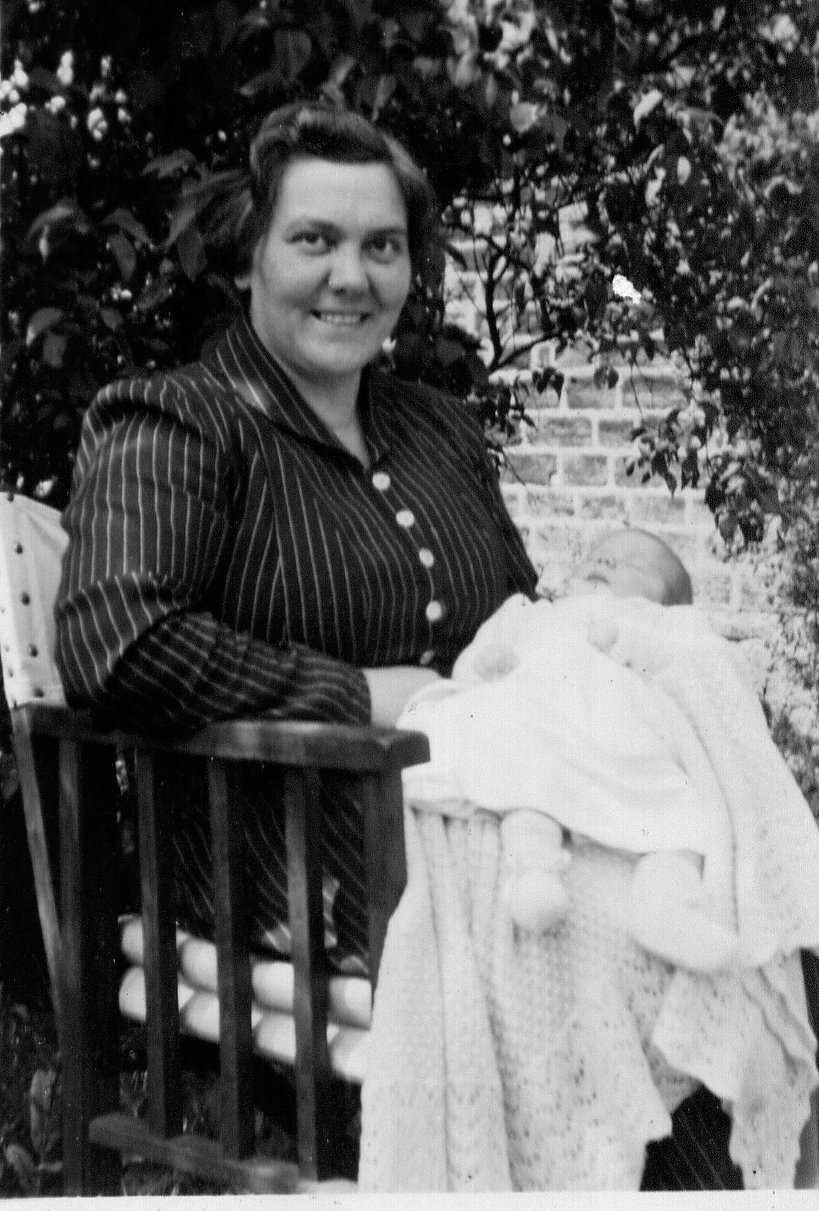
The next event in our family life was the birth of
Rosalie, on Friday, 17th January 1947. She was born in the manse at about 4.30
p.m. I had to take a funeral in the afternoon (my first at a crematorium) but
was back in time. The mid-wife was in attendance, and she called the doctor at
the critical time, and all was well. We had engaged a home help, Mrs. Poole,
and she was present on the Friday and Saturday, and sent round some dinner for
us on the Sunday. But on Monday morning we had a message to say that she had
flu and couldn’t come. So there was I, left in charge! When the folk at church
got to know, several ladies came in to lend a hand.
One of the notable events of 1948 was the ordination
of Keith Skirrow, son of the church secretary at
Rawdon. He had been trained at Regent’s Park College, Oxford, and had offered
himself to the B.M.S. for service in China. But it was now the time when the
door in China seemed to be closing, so he went to Shoreditch Tabernacle as
temporary assistant to the minister, and eventually with the B.M.S. to
Bangladesh (as it now is). Dr. Ernest Payne and the
Rev. Robert Child (College Principal) came to Rawdon for the ordination.
Another event of 1948 was the visit of the Rev. H.J.
Garland, a Methodist minister who was travelling the countryside speaking[3]
about the hymn “Abide with me”, and its author, Rev. H.F. Lyte.
He was related to me, and we found the simplest way to describe the
relationship was to say that his grandfather was brother to my
great-grandmother! He gave his lecture on a Tuesday night at Rawdon, and the
following evening at Guiseley, and stayed with us for the two nights. He was
full of anecdotes, sometimes a story within a story.
Rawdon Baptist College went through a difficult
period following the death of Dr. Underwood. Dr. Marshall took over the responsibility for a time, and
then Mr. Hough. In this period I helped a little with some Greek lessons. Then
Rev. D.S. Russell[4]
was appointed as principal, and college affairs began to prosper again. But the
isolated situation in Cragg Wood, the difficulty in
retaining domestic staff, and the distance from Leeds University made the
running of the college ever more difficult. And eventually the college was
transferred to and amalgamated with the one at Manchester, to form the Northern
Baptist College.
At Guiseley there was a Guide company and a Brownie
pack. As soon as Rosalie was able to be left with me, Phyllis lent a hand, and
before long she was back in uniform, organising annual Guide camps. A company
and pack were started at Rawdon. Then Phyllis became involved in district
affairs, and in certain circles I came to be known as Captain’s husband!
Phyllis had been a Guider in her younger days, and in our 15 years in Aireborough she held at different times such offices as
district secretary and district commissioner. Rosalie entered fully into the
movement, and Bernard became a Scout, first at Yeadon, and later at the Cragg.
Holidays were few and far between. Even to manage the
fare to Soham for all of us was difficult. But one
year we had a caravan holiday at Filey, and some
years later a boarding house holiday at Whitby, both very enjoyable. Then in
1961, as we were on the point of leaving, we had the offer of a caravan in the
Lake District, near Hawkshead.
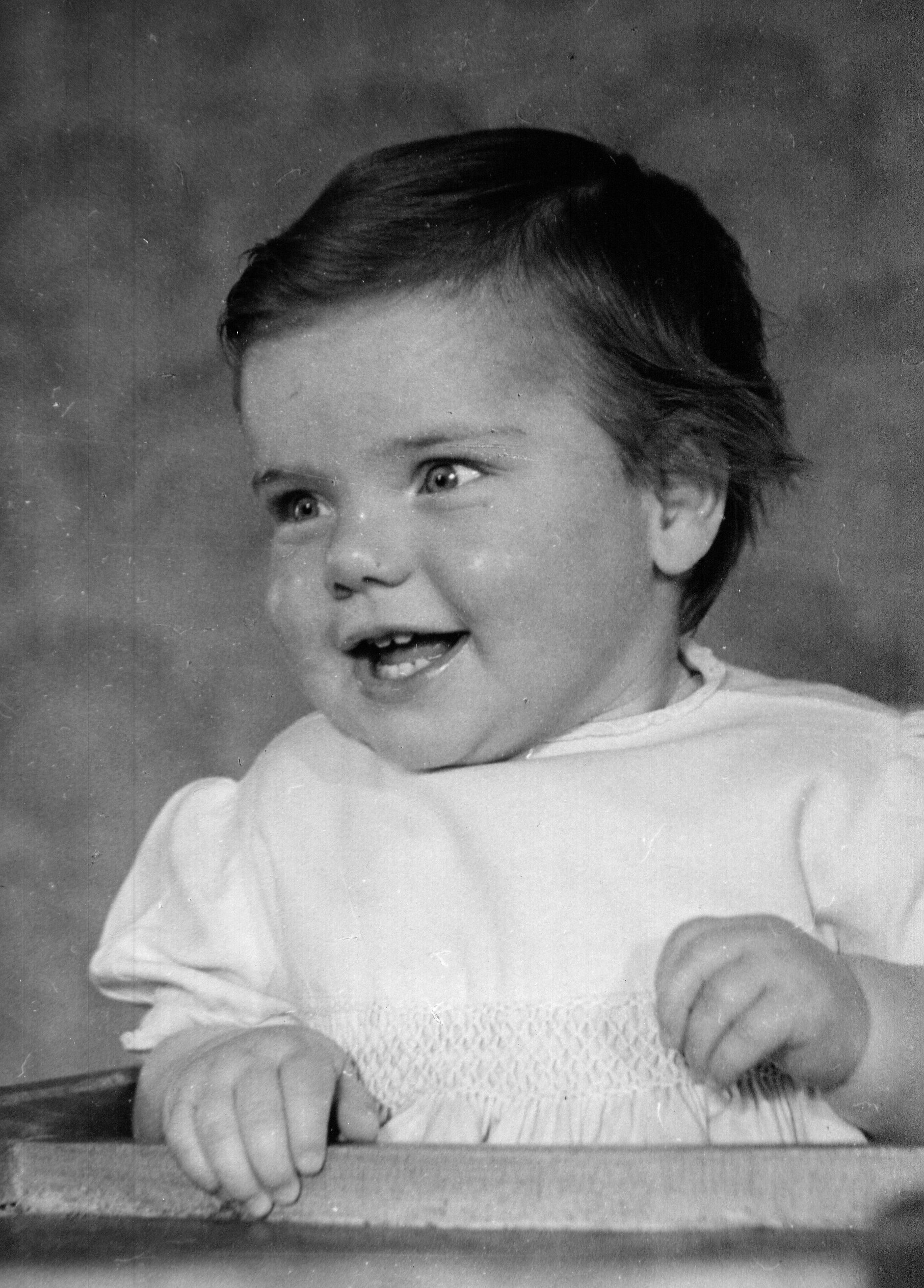
Marguerite appeared on the scene in 1952. We had
expected her to be born in the manse, as Rosalie was. But towards the end of
her pregnancy Phyllis developed toxaemia, and the doctor advised her to go to
the Four Gables Nursing Home, at Horsforth. It was there that Marguerite was
born in the afternoon of Tuesday, May 6th. Some days later Mr. Barmby brought mother and daughter home to the manse in his
car.
As our family grew we found it increasingly hard to
make ends meet, and to receive lodgers or paying guests was a way of helping
others and ourselves at the same time. In 1956 we received Nigel Clarke. 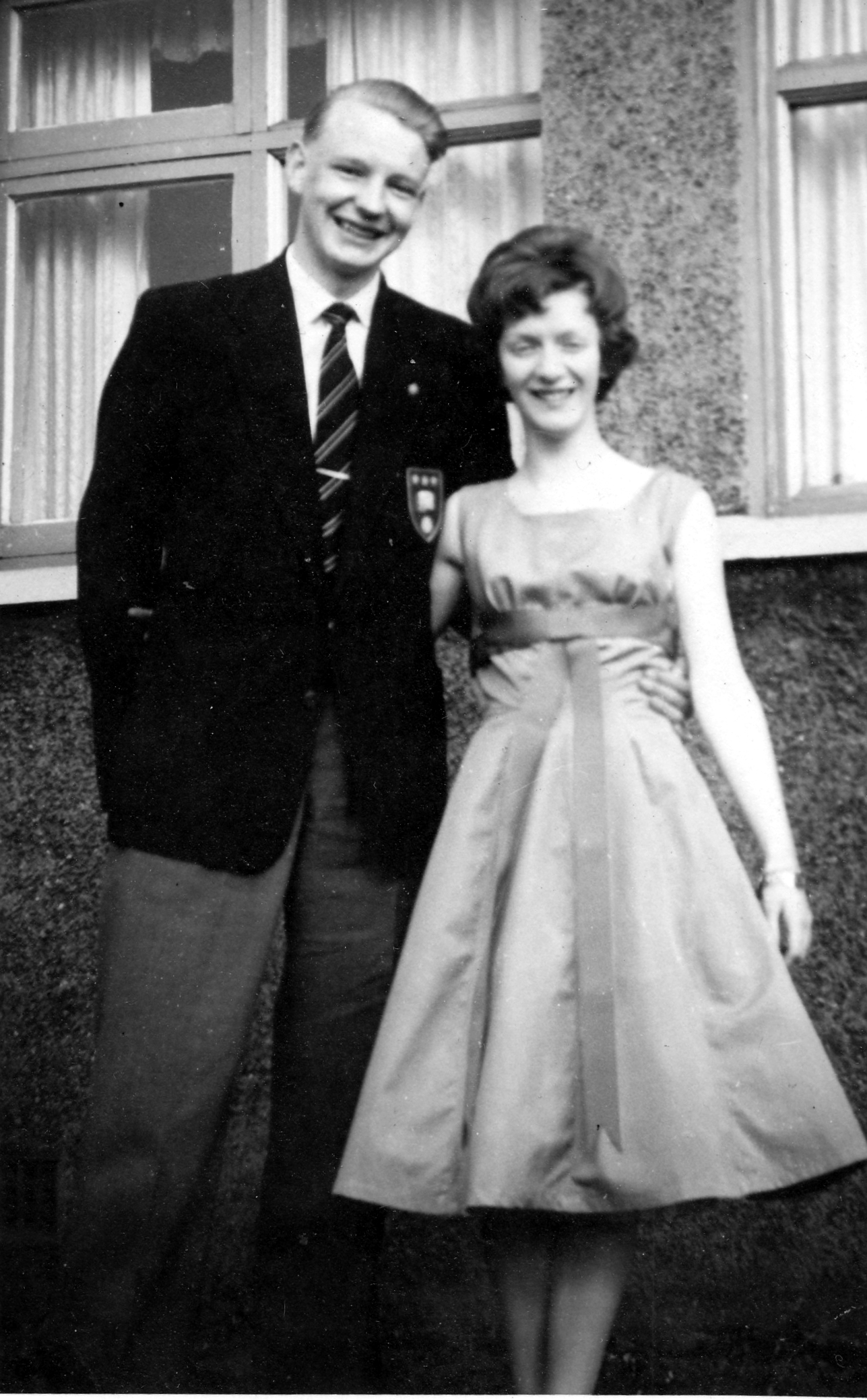 His
parents were out in Brazil, and he had another year to do at Aireborough Grammar School. He was a seventh day Adventist
and spent his weekends in Sheffield. Later (in 1961) we attended his wedding
there.
His
parents were out in Brazil, and he had another year to do at Aireborough Grammar School. He was a seventh day Adventist
and spent his weekends in Sheffield. Later (in 1961) we attended his wedding
there.
Then in 1957 we offered accommodation to a Leeds
University student, and received John Brooks, whose home was at Bures, Suffolk.
He accompanied us to church, and in course of time became friendly with Maureen
Clark (both pictured right in 1959).
He bought a scooter to ease the journey to and from Leeds. And when the summer
vacation of 1959 came, he set off with Maureen to visit his parents. Sadly, he
met with an accident, and both of them were killed. So there was a double
bereavement.
And in 1960 we received Gilberte,
a French teacher who was at Aireborough Grammar School
for a year. She was with us for two terms, and we have kept up a Christmas
correspondence with her. She is now married, with two daughters. After a number
of years in Brest, the family are proposing to move back to her late mother’s
house in Hanvee.
A different kind of opportunity came in 1958 - the
chance to share in the Free Church chaplaincy at Menston
Hospital, sharing with the Guiseley Methodist minister. Having been at Rawdon
and Guiseley now for 12 years, I at first wondered whether it was appropriate
to begin a fresh undertaking. However, after much thought and prayer, and
consultation with the Area Superintendent, I accepted. The duties involved a
weekly visit to Free Church patients in the wards, a fortnightly service in the
chapel on a Sunday afternoon, and occasional funerals. The chaplaincy brought
me into touch with the sadness and often-bizarre results of mental illness, but
also made me aware of the patience and devotion of many of the staff. One man
in particular used to say that he preferred to be on duty on Christmas day,
bringing happiness to the patients 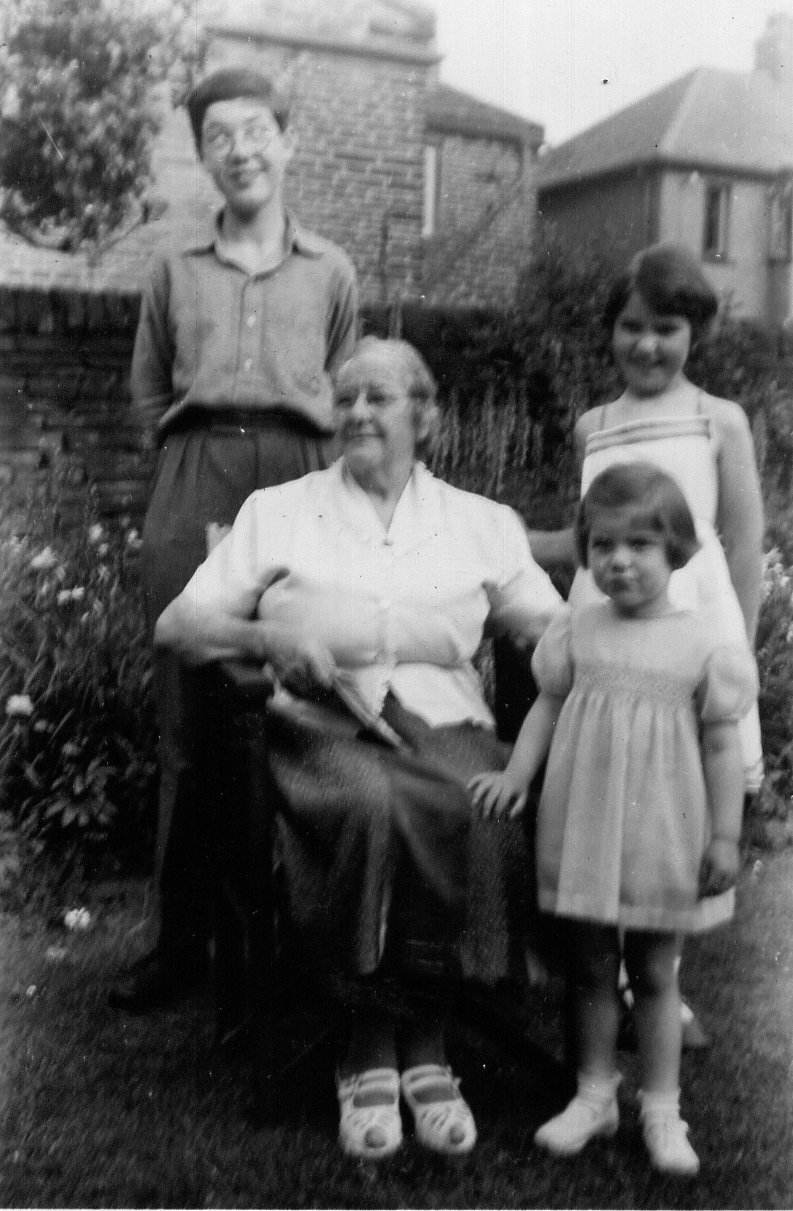 in his
ward, rather than sitting by his own fireside.
in his
ward, rather than sitting by his own fireside.
The stream of Canadian visitors, whom we have been
pleased to receive in recent years, really began in 1955 when Aunt Helena came
(pictured left with the three children).
She had booked to attend the Jubilee Congress of the Baptist World Alliance in
London, and had travelled across Canada from Lethbridge, Alberta, by train. She
arrived by ship at Liverpool, where I met her. She stayed with us for about a
week, and then went on by coach to Birmingham, to stay with Marjorie Harcourt
and her husband. From there she went to Stony Stratford, to stay with my
parents - then to the Congress - and finally returned to Canada by ship from
Southampton.
Two years later Leonard Laflamme
(son of my cousin Irene) was over for the Scout Jamboree. He stayed on
afterwards, was for a time in Leeds with a friend, and called on us from there.
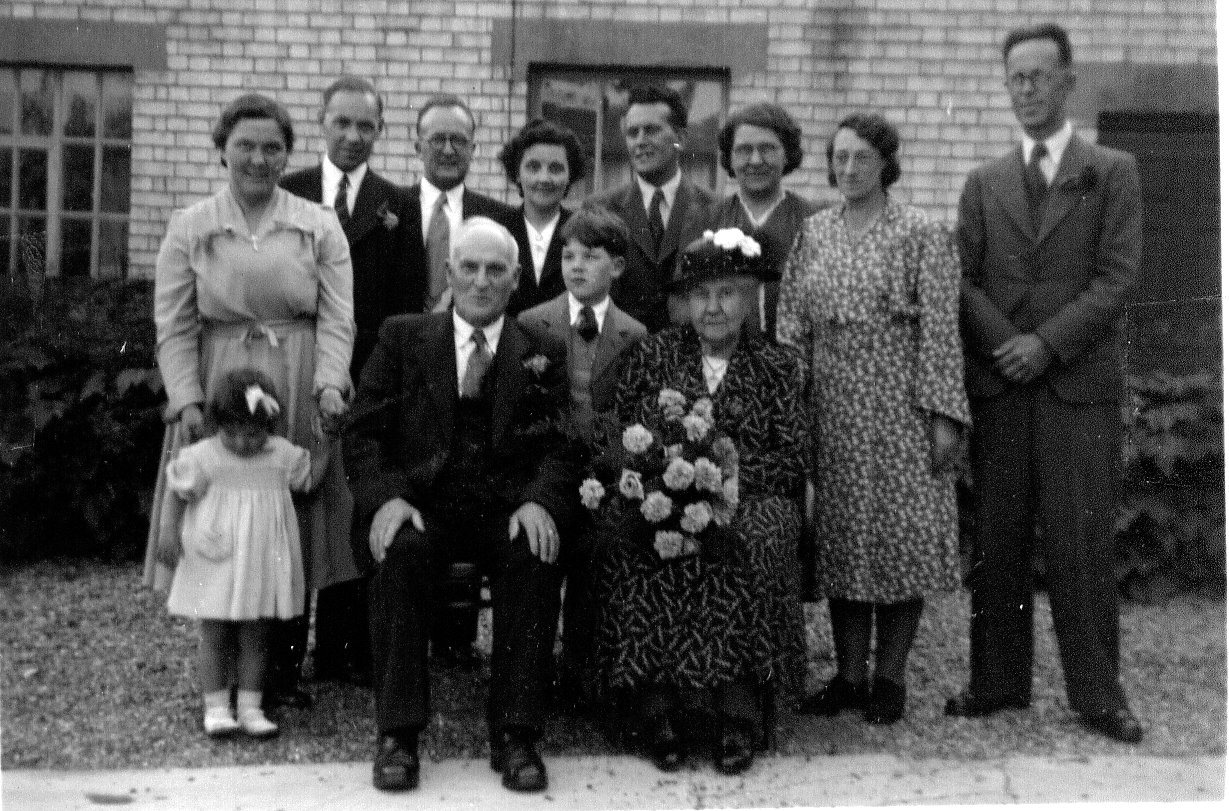
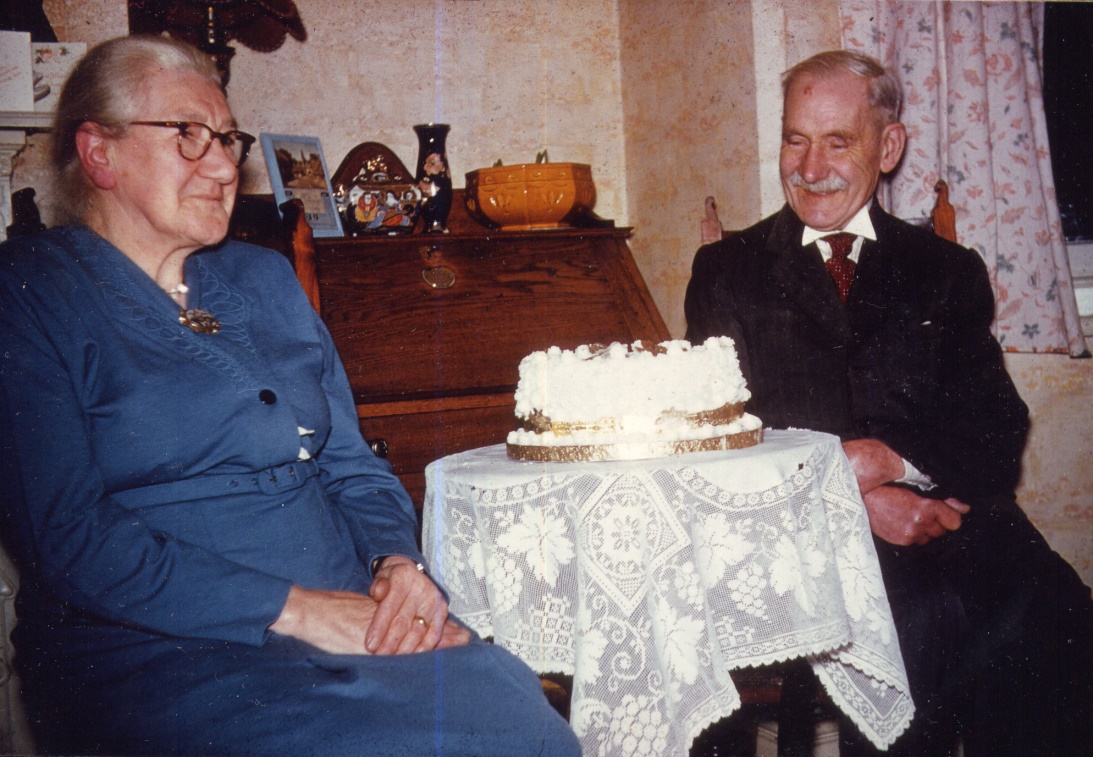
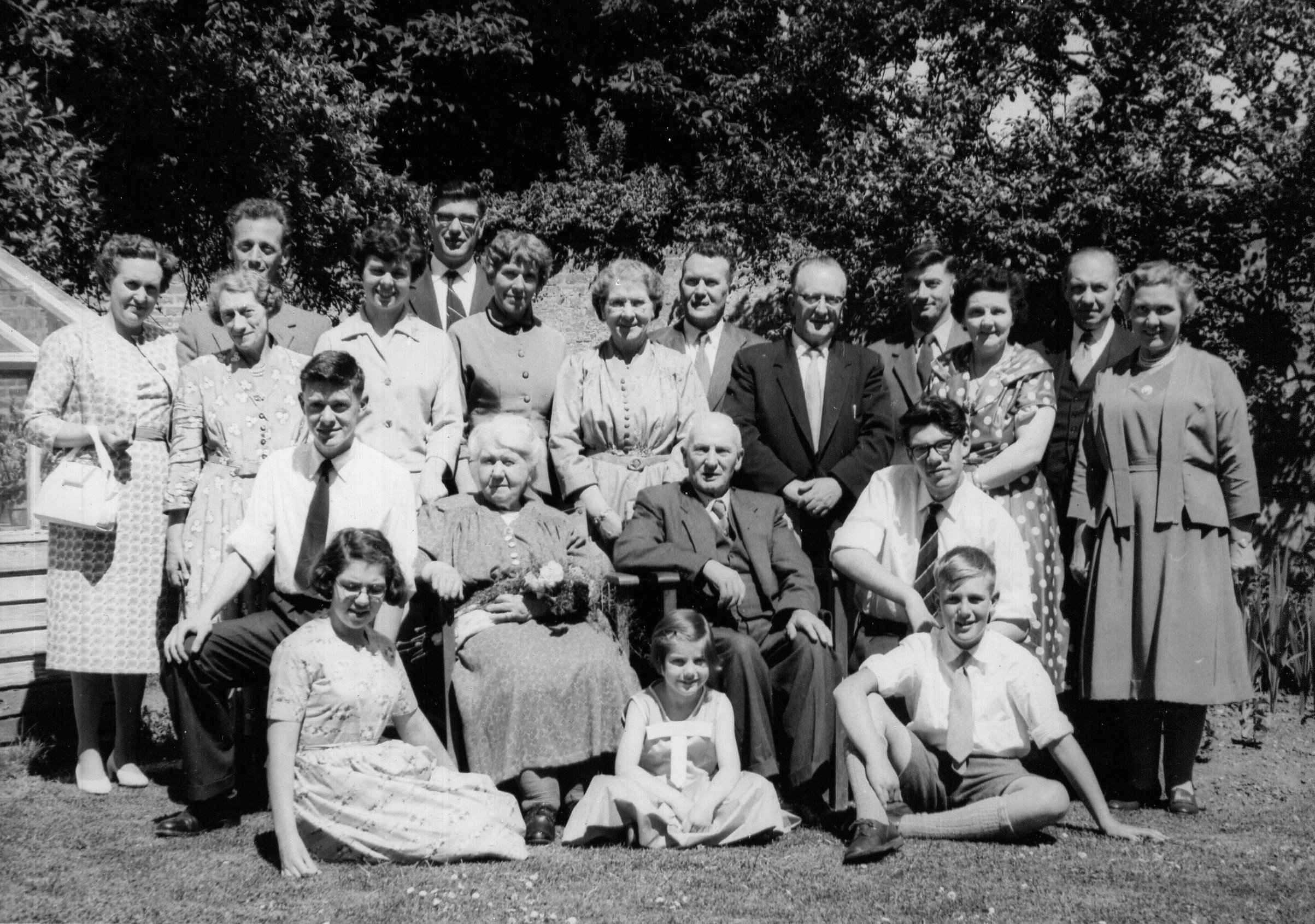
Notable family occasions were Phyllis’s parents’
Golden Wedding (1949) and Diamond Wedding (1959). The former was quite a church
occasion, with sports in a field, and tea in the schoolroom. The latter was
naturally a quieter and more personal celebration. Both were occasions for the
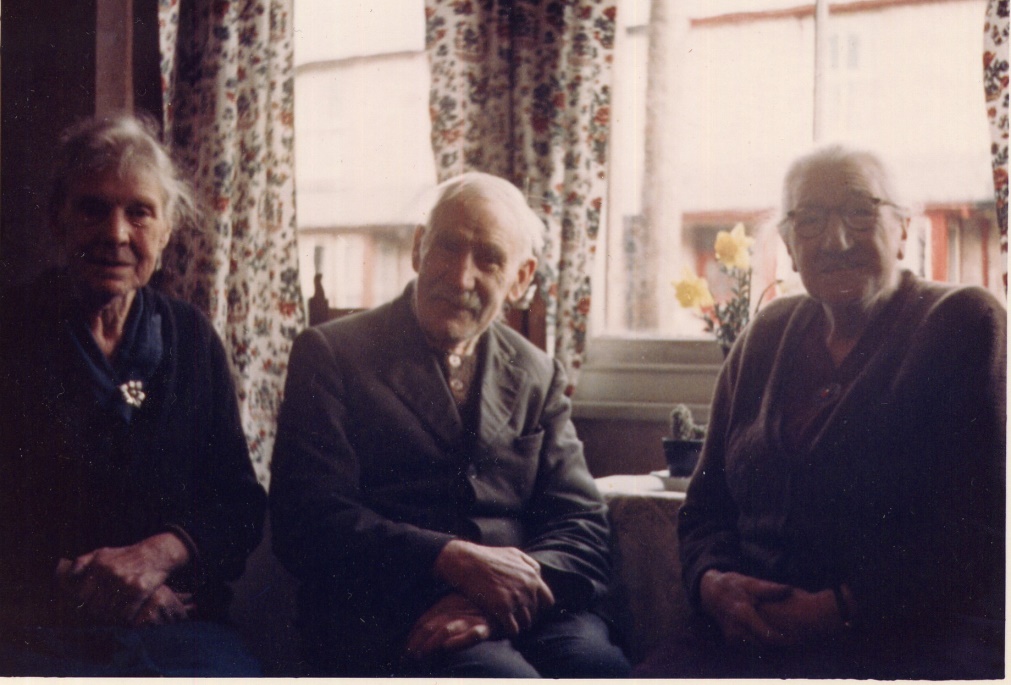
large family to meet and rejoice. My parents Golden Wedding was in 1957, and as
it was on Christmas Eve, they came to Rawdon to spend the festive season with
us. Ten years later they too reached their Diamond Wedding.
|
|
|
|
|
|
Cook Golden Wedding |
Harris Golden Wedding |
Cook Diamond wedding |
Harris Diamond Wedding |
By 1961 it was becoming clear that both of us were
too heavily involved. We considered whether it might be possible to curtail our
commitments, but eventually decided that the only thing to do was to dig up our
roots and make a fresh start elsewhere. Bernard was finishing his schooling,
and had the opportunity of a place in Portsmouth College of Technology, to which
he went in October. Marguerite at the age of 9 was not at a critical stage in
her education. Rosalie was 14, and the most affected, but she put a brave face
on the transition. Again, the first Church that I visited gave an invitation,
and at the end of November 1961 we went to Coleford
in the Forest of Dean, after 15¼ years at Rawdon and Guiseley. It was an
entirely new situation for us all.
Click here to continue to the next
“chimney”, or to return to the title page.