My Golden
Milestones
88 High Street,
Wollaston, Wellingborough, Northants.
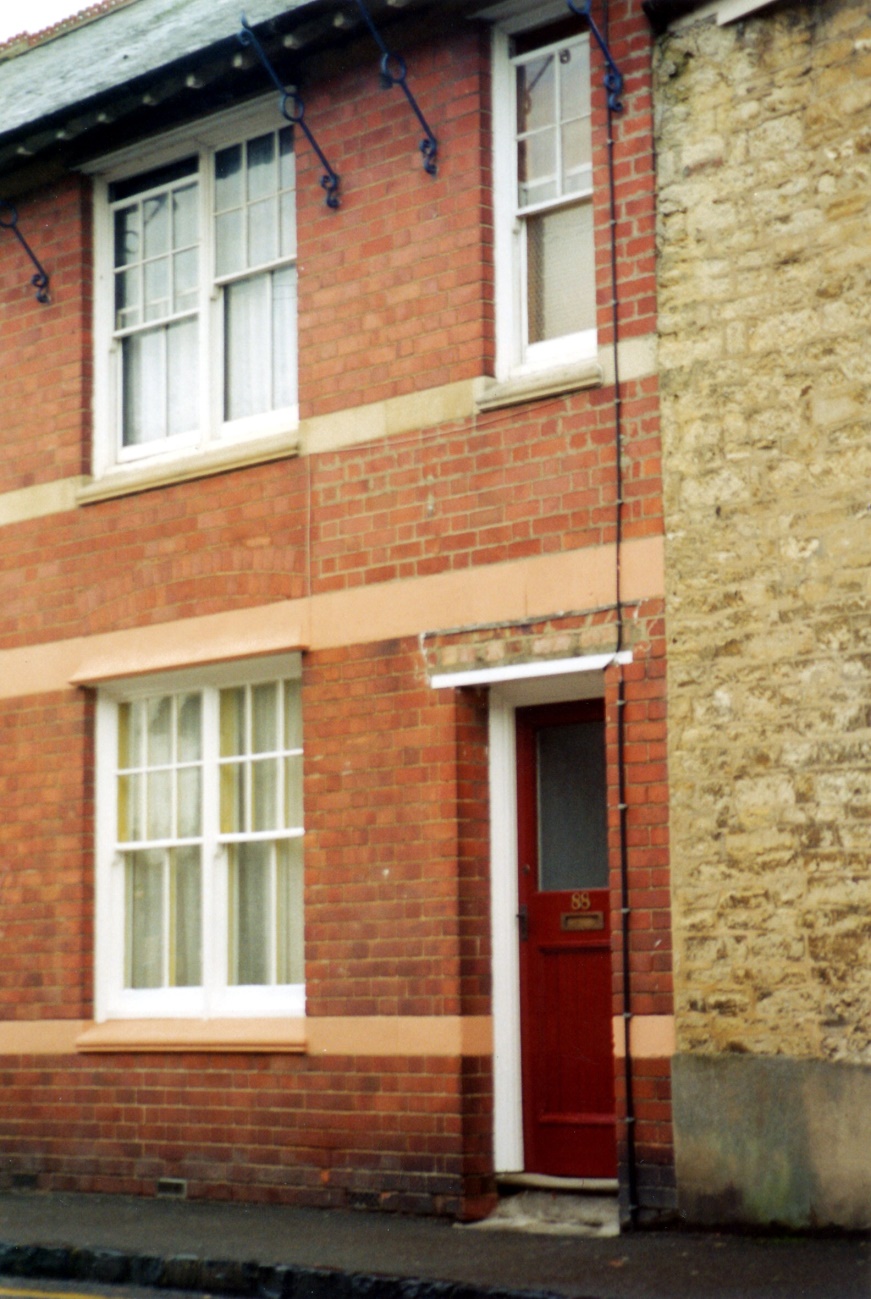
House and church photographed
in 2010
No you are not seeing double! By one of life’s
strange coincidences, I was living at 88 High Street for the second time! The
manse at Wollaston had for a long time been let, as a succession of young
ministers (many of them students) did not desire it. I don’t think I should
have wanted it myself. Houses were as scarce as most other commodities during
the war. So it was a case of accepting whatever accommodation was available.
This was a terrace house, with a doorstep right on
the street, and just a yard at the back[1]. In the absence of a garden I rented an
allotment in the grounds of the water tower, on the outskirts of the village. I
once had the opportunity to climb the water tower, and was quite surprised to
find that the level of water was controlled by a ball cock no larger than in a
domestic cistern; at least it seemed no larger.
The chief occupation was the making of shoes, there
being several small factories in the village. The unusable off cuts of leather
were commonly used as firelighters, and produced a distinctive smell. Another
common custom was the taking of Sunday dinners to a bake-house for cooking.
After the flat countryside of Cambridgeshire, we now had to get used to the
hills. Wollaston itself is quite steep in places. The nearest town is
Wellingborough, and we used to cycle there for major 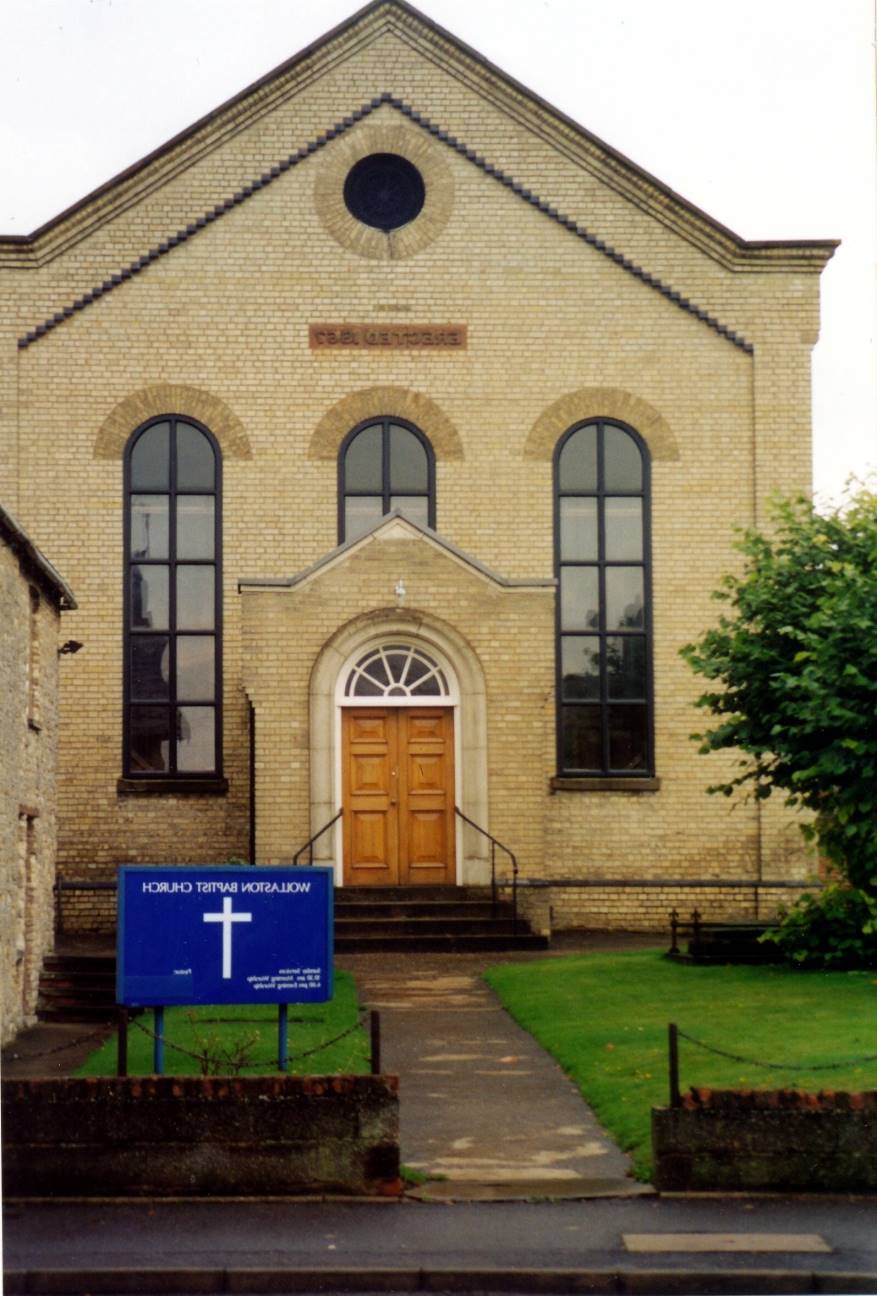 items of
shopping.
items of
shopping.
The church was not as old as the one at Soham, but dated back to 1835. The present building is
pleasant and well cared for, and the original building is adjacent, and used
for Sunday school and other purposes. At the side there was a useful hut,
referred to as the institute, for young peoples’ work and recreation. This has
now been removed, and a modern manse erected, still leaving a grass area for
tennis, etc.
In spite of our limited accommodation, we had a
number of visitors - our parents, and other relatives, naturally. My parents
came for our first Christmas, my father walking the 19 miles from Stony
Stratford on Christmas morning (he was unwilling to leave his home on Christmas
Eve before Miss Bridgeman had closed her shop, as she used our side entrance,
and by this time there was no public transport!). The visitor who came the furthest was my cousin Eustace Churchill[2],
who was in England with the Canadian forces, and was a chef in a military
hospital, I think at Hayward’s Heath.
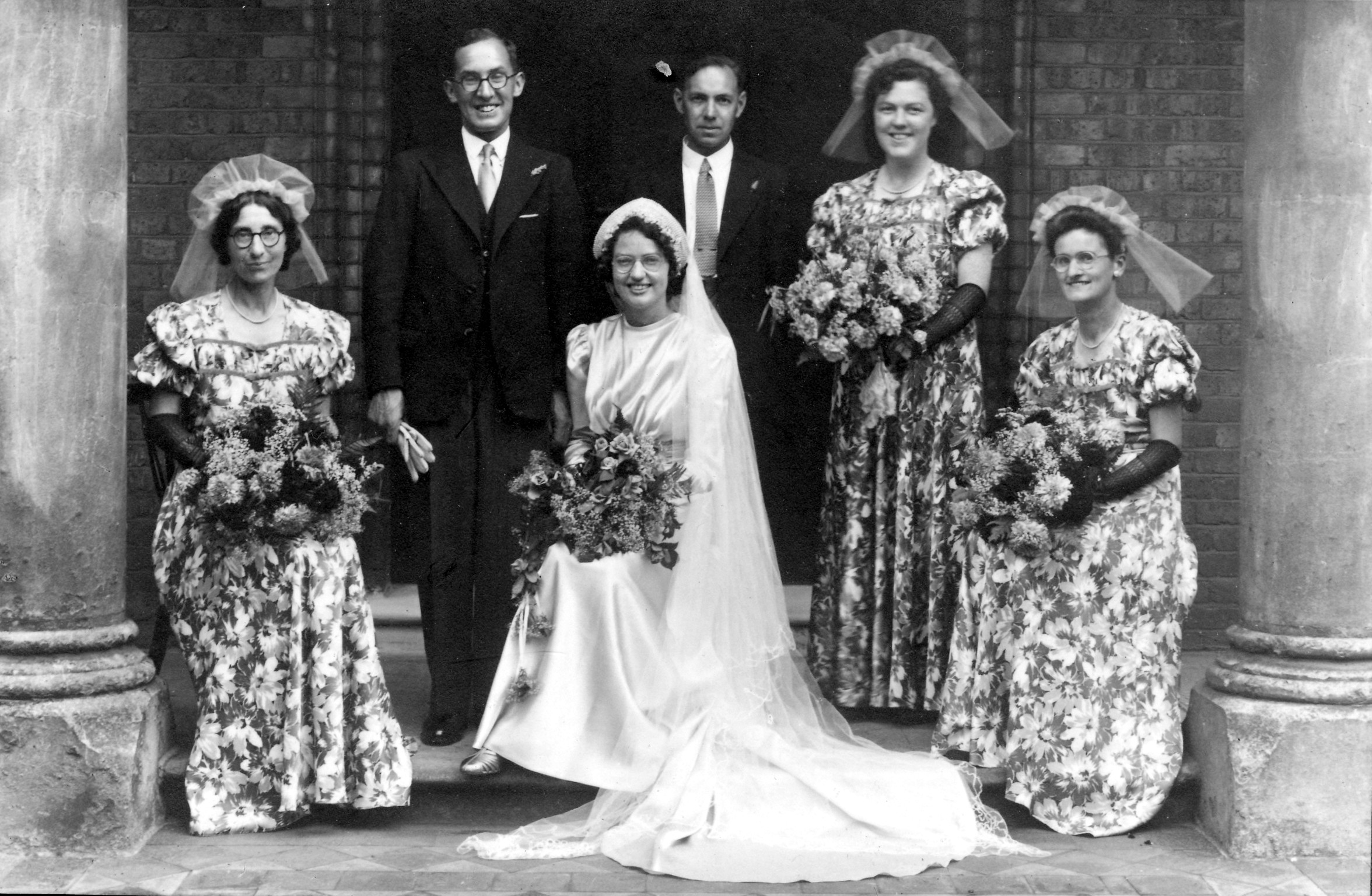 In the
summer of 1943 Ernest Ford’s wife Lillian was killed. They were cycling home
from a mid-week service at their church in Leytonstone. At that time the
traffic lights were switched off, as a wartime economy measure. And at a
crossroads a lorry crossed their path, and she was killed instantly. The
following year, Ernest married Ethel, a young lady from his church, whom
Phyllis had met at a training week at Hazlemere,
Surrey. And Ernest asked me to be his best man on August 5th 1944 (picture left).
In the
summer of 1943 Ernest Ford’s wife Lillian was killed. They were cycling home
from a mid-week service at their church in Leytonstone. At that time the
traffic lights were switched off, as a wartime economy measure. And at a
crossroads a lorry crossed their path, and she was killed instantly. The
following year, Ernest married Ethel, a young lady from his church, whom
Phyllis had met at a training week at Hazlemere,
Surrey. And Ernest asked me to be his best man on August 5th 1944 (picture left).
On May 8th 1945, the war in Europe came to an end; in
the Far East it continued until Aug. 15th. We felt we might have a real holiday
(as distinct from visiting relatives). So we booked a fortnight in August at a
guesthouse in Hunstanton. My mother joined us for one
week, and Phyllis’s parents for the other. It was a complete change for us, and
very enjoyable. While we were there, my grandmother died at Stony Stratford. I
don’t think we were told at the time; certainly we did not return for the
funeral. I think it was at this point that aunt Em
left her situation in the High Street, and went to live with aunt Edie in Park
Road.
A few weeks later, on Sept. 15th, my father suffered
a seizure, with loss of speech and the use of one side. A blood vessel had
burst near the brain. What the cause was we never knew, but wondered whether
the death of his mother had anything to do with it. He was, of course,
incapacitated for months, but happily the improvement started immediately, and
while progress was slow it was sure. My response to this situation was to make
a weekly visit. I would cycle over on a Thursday morning, spend the night
there, and return home about teatime on Friday. The first object was to
complete the printing orders that were in hand. Then, as Dad began to improve,
the secondary object was to keep things ticking over until he should be able to
sell the business. I was able to keep this up for several months, until about
February, I think. And by this time he was sufficiently recovered to do a few
things himself. The outcome was that he sold the business in 1946, and bought a
terrace house (13 Clarence Road) for his retirement.
Our time at Wollaston was not as long as it might
have been, because of the complications of a time limit[3].
In 1946 it seemed right to seek another church. And the first visit I made was
to Rawdon and Guiseley in the West Riding of Yorkshire. This visit resulted in
another, when Phyllis accompanied me (we were staying with May and Vic at
Maidstone, and left Bernard with them for the week-end). Then came an invitation, without time limit, which I accepted. In
August Phyllis took Bernard to Soham, while I
accompanied the furniture van, joining them when the goods had been deposited.
And we took up residence, and the work of the churches, in September 1946.
Click here to continue to the next
“chimney”, or to return to the title page.